

Ardoin reviews engaging educational processes that foster environmental outcomes
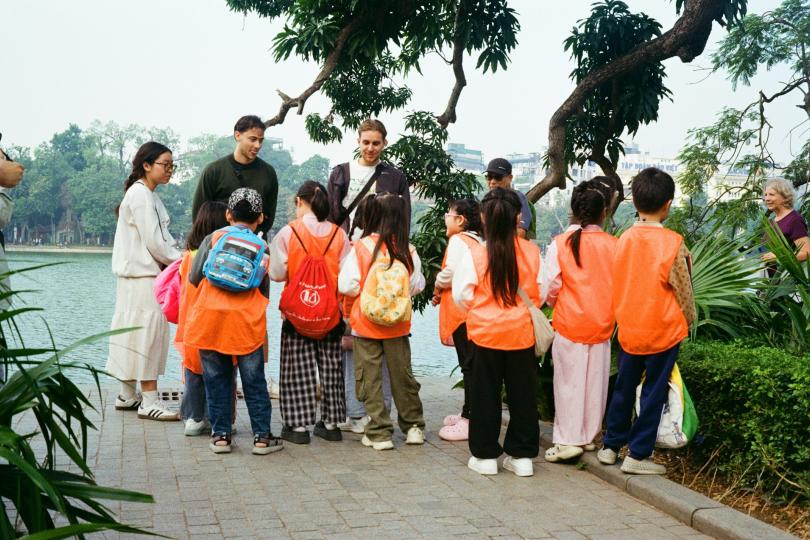
Photo: Khanh Do / Unsplash
Nicole Ardoin is the lead author on a new study that explores what makes environmental education programs effective by synthesizing the results of eight reviews. Nicole shared ‘the bottom line’ on LinkedIn: “As environmental challenges intensify, strategic investment in well-designed environmental education is essential. Our findings provide actionable guidance for those working to strengthen human-nature connections and build capacity for environmental stewardship.”
The open-access paper is available through the British Ecological Society, and a plain language summary can be found on the Relational Thinking blog.
Abstract
- Alongside the rise of the evidence-based conservation movement over the past 20 years, environmental education (EE) has emerged as a worthwhile strategy to achieve conservation goals. EE can help develop the societal attitudes, knowledge, skills, behaviours and norms that address conservation and environmental challenges and build deeper connections between nature and people.
- To better understand the effectiveness of EE in achieving such outcomes, we conducted a series of systematic reviews of evidence-based scholarship. In this article, we synthesise key findings derived from an analysis of 546 international peer-reviewed studies for distinct audiences (e.g. early childhood, K-12 provision) and contemporary priority areas in the field, namely climate change, conservation, civic engagement, positive youth development and community/citizen science.
- Our synthesis reveals six recurring themes that contribute to effective EE: employing diverse teaching and learning approaches; fostering participatory methods; including direct action components; focusing on local community settings; connecting to personally relevant information; and collaborating with experts and stakeholders. While no universal model emerged, programmes can help strengthen people–nature connections by integrating these educational elements into evidence-based conservation.
- EE programmes should prioritize authentic, community-grounded experiences that engage participants as active agents rather than passive recipients. To achieve desired conservation and broader environmental goals, EE initiatives require sustained investment, cross-sector partnerships and evaluation frameworks that capture long-term behavioural and environmental outcomes.
Citation:
Ardoin, N. M., Reid, A., Bowers, A. W., Ballard, H., & Monroe, M. C. (2026). Engaging people in educational processes that foster environmentally valuable outcomes: A synthesis of key findings across eight systematic reviews. People and Nature, 00, 1–15. https://doi.org/10.1002/pan3.70265