
Expanding biodiversity through art and globally accessible citizen science
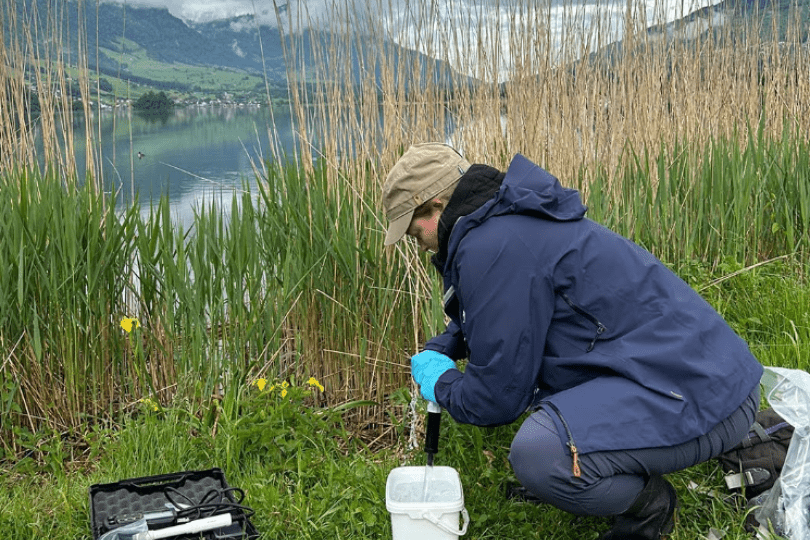
Kristy Deiner collects an eDNA sample using the SimplexDNA protocol. Photo: Iris Struijk
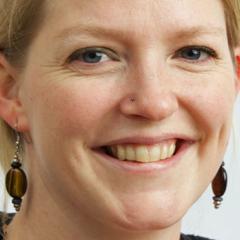
Kristy Deiner is “fascinated and humbled by biodiversity.” She works to determine “how [biodiversity] is generated and why it's important to maintain it.” I (Cora Preston) recently had the pleasure of speaking with Kristy about two projects she co-founded: SciArt and SimplexDNA. Both efforts seek to expand community access to biodiversity science through innovative collaborations. Below you’ll find a lightly edited version of our conversation exploring three topics: how SciArt is bringing people together through art and science, SimplexDNA’s “Uber of biodiversity,” and Kristy’s experience leaving academia to run a private company.
About Kristy: Kristy Deiner received a Switzer Fellowship in 2010 while studying ecology at UC Davis. Her dissertation research focused on applying genetic tools to assess biodiversity in alpine lakes and endangered vernal pool fairy shrimp. After a Fulbright fellowship and post-doc positions in Switzerland, England and the U.S., she was until recently an Assistant Professor at ETH Zurich. Kristy has developed environmental DNA (eDNA) detection methods for assessing biodiversity across all three domains of life from a single water sample, and founded SimplexDNA to scale up eDNA biodiversity monitoring around the world.
About eDNA: Every life form sheds unique DNA as it moves through the world. This DNA can be collected and sequenced from water, soil, and air anywhere using simple, standardized methods, resulting in so-called eDNA. Using open source software, these DNA sequences can be translated into a ledger of life in a particular place at a particular time. eDNA is capable of detecting many thousands of species in a given location from a single, simple-to-collect, sample. Noisy or silent, visible or unseen, megafauna or microbe, any species is detectable (SimplexDNA whitepaper).
Cora: Tell me about SciArt and how it came to be?
Kristy: I'm a scientist by training, of course, but have always found this connection to art and the way we can use art to communicate. I specifically focus on sound. In science, I studied molecular methods for measuring biodiversity, from molecular systematics and population genetics research all the way to developing eDNA technology. I spanned the spectrum of very different things in terms of genetic technology as it relates to conservation and biodiversity.
My interest in the intersection of art and science started a long time ago with using music translated from DNA-now a project I also help out with called DNA of music. We use music to tell people about sequences that we find in the environment, such as in a water sample, that we can't even put a phyla name on (example linked below). We don't even know what domain of life it goes in, but we can detect that it’s there. In the tree of life there are three domains. Then there used to be 35 phyla when I learned biology in the 90s, and now we have over 130 phyla, because the genetic revolution has shown us the diversity of life is huge! With eDNA sampling we find these sequences, and we're like, well, what are they? So we actually convert them to music.
DNA of Music Example
It’s a different way to communicate about something that we have no name for, we don't even know what it looks like, we just have a DNA sequence. How do we get people to care about life, but we don’t even have a picture of it? It's out there, and it's living, it's doing something, and maybe we should conserve it, right? So I got into this kind of space a long time ago and started working with artists to think about new ways to transform and share what we learn as scientists.
SciArt is “fostering creativity and collaboration to address societal and environmental challenges through innovative projects, community engagement, and artistic interpretation of science.” We have science and artists all coming together who don't normally talk to address environmental issues and engage people in all the novel ways we have to see and measure environments. We have probes that you can put in the ground, or water, and listen to sounds of life underwater and in the soil. We held a series of workshops where we went out into nature and experienced it in these new ways, and then we had some public exhibits. One of our artists, Jill Soctt, made a documentary about it as well. I thought I’d share that with the Switzer Network to increase the reach of what we're doing, and share the model, so that it inspires other people.
What is something that really excites you about SciArt?
It's the first time in a long time, actually, that I'm really interacting with people who are teenagers, all the way to retired people. To have something that's interesting to that breadth of age and generations, and bring people back together to something that matters to all of us. There's very few things in our society these days where we can all agree on, but one of those is that nature's important. There's people that value it more than others, but people still enjoy going outside and going for a walk is still nice. It’s fun to give people new tools to observe the world in a new way. So it's inspirational for me just to be able to talk to people that are just a really different breadth of society that I never accessed as a professor, so that’s what makes me most excited about it.
Also coming into contact with artists who are, like scientists, trying to explain the world around us through their art. They interpret things in different ways, and I'm learning a ton by being exposed to an artist's process, how they come to new understandings, and how important that also is for society. There's these other ways of knowing and thinking, and how do you put the both together to communicate our challenges that we have as society? Especially, when it comes to environmental challenges, which are big and touch us all.
What is SimplexDNA and what is it working to achieve?
Essentially, it boils down to trying to build a perpetually funded system for monitoring biodiversity at a global scale. Just a small ambition, right? [laughs] It’s a big grand vision, but we have a really powerful technology with environmental DNA.
Giving people a kit and sampling water is a very easy process, but the amount of data and the value of that data and the quality of that data is scientific-grade data. So it means we have the ability for anybody to participate in monitoring at a very high resolution.
One of the big pillars of what we're building is the Uber for biodiversity. Which is to say, that we can get sampling kits to all these people, they can get training, and then they can create a job from this. They can go out and they can do monitoring with this technology and send it to a lab, hopefully a local lab. We’re working to create a network of labs all over the world that will accept these samples and process them in a specific way. And then we're building a data platform where all that data can go in, and then that data can be sold to various organizations that need biodiversity data. And the sale of that data actually goes back to the people who own it, who collected it. Then it will pay for more data to be collected, so that's where the money comes from.
Where Uber kind of went wrong is they didn't let their drivers participate in the revenue sharing, right? But that's what we're building, is that if people contributed to it, then they also get to financially benefit if that data's being used. We're building a whole loop into a system to create a financial flow that stays within those who are creating the value.
This is all being done with blockchain technology and tracking, and people will be paid through digital wallets so that we can really reach rural people that are unbankable. Because a lot of people could benefit from a job opportunity like this. Most gig economy work is in urban areas. But this will really create jobs for people that are much more rural and closer to protected areas, who typically have very few economic opportunities at this sort of impact on a global scale.
For example, carbon credits and biodiversity credits could use our data to prove that their claims are correct, but we are not credits in ourself. We're a data layer. We're one step back in the value chain. We’re a data supplier, but we're using citizen science globally to build that data. And those people will continue to own that data, and benefit from its economics, fitting in with the Nagoya Protocol. [The Nagoya Protocol is an international agreement which aims at sharing the benefits arising from the utilization of genetic resources in a fair and equitable way.]
The ‘biodiversity Uber’ is called GetaSense, and we're starting with eDNA and sound, but there's other simple technologies that could be implemented in that. We also have a laboratory where we currently offer services to process samples, and that's kind of where we got started. We had to get all that up and running first, and now the other pieces are starting to get built.
How has the transition been for you, to go from your academic role into your own venture?
It's been fun. Academia is a very old institution. It's got its rules, it's got its metrics. It's a very established institution and society, especially at the university level. Of course, there's always innovation happening around what a university is and how it should move forward, but it's nice to step outside of that and be building something completely new.
I've been an academic for 20 years. As an academic, I had to make everything kind of fit into the guardrails of the institution and how society views it. I’ve gotten to step outside of that and be like, wow, there are no guardrails, I get to make it up! It's given me a whole new level of, well, let's just build it and see! There's still a sandbox you have to play in, and there's boundaries to that, but it's so much more freeing to have these big, crazy dreams and ideas and vision, and not have the same guardrails at all. Sometimes it's a little bit too much freedom, because nobody knows how this works, so it feels kind of impossible to do, because who knows, right? But, I've really enjoyed that.
I've also realized just how much skill transfer there is from being a scientist to running a company and developing a business. I actually do have management skills, I have all these kinds of things. Learning that for myself was really nice. It is a new freedom of feeling that I don't have to be limited by the way something has been defined to work, and I'm actually defining how it should work. I have just enough experience and credibility and knowledge to be dangerous enough to think about new systems. So we're building a whole new system. People still think I'm crazy, and… Whatever, I have pink hair, so why not?
I think that's exactly what we need. We need pink hair, we need bold vision, and freedom to pursue it.
Just shake it up, right? I'm not bored, I'm enjoying it, I'm excited about how many people are coming to the table on this. I meant to do it while having another job for a long time. We have been building this for 7 years, and we're getting the momentum at the right time, so it's quite special. At times it's been frustrating and hard to build the whole thing and convince people of this trajectory. But we’re getting there. It’s a fun time in my career.
We won a Rainforest XPRIZE around figuring out how to monitor biodiversity in complex settings such as the middle of the Amazon. We won the prize for our ETH BiodivX work “providing sustainable economic opportunities for Indigenous and riverine communities while advancing biodiversity science in a culturally respectful way.” Our project is around the very sensitive topic about Indigenous ownership and stewardship, and how data relates to that. Who has the right to that data? Stewardship and ethics around biodiversity data is a key component to what we're building. We're trying to solve in an equitable way with people actually getting to share in the economic benefits that this generates.