
Kristy Deiner

About Kristy's Work
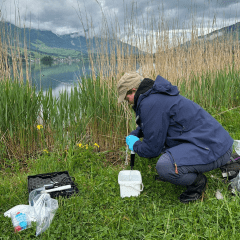
Kristy Deiner is an environmental scientist and internationally recognized pioneer in the field of environmental DNA (eDNA), whose work has transformed how biodiversity is monitored and understood. She was a professor at ETH Zurich, where she led research at the intersection of molecular ecology, biodiversity science, and next-generation environmental monitoring technologies.
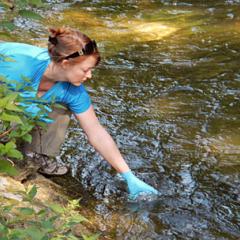
Her academic path began in environmental science and ecology, with a focus on freshwater systems and species interactions. She later specialized in molecular ecology during her doctoral research, contributing to the early development of eDNA as a powerful, non-invasive tool for detecting species from genetic material found in environmental samples such as water, soil, and air during her academic time. Her work has been instrumental in advancing scalable, data-driven approaches to biodiversity assessment.
Deiner’s contributions have been recognized through prestigious honors, including her selection as a Fulbright Scholar, highlighting the broader impact and innovation of her work in environmental science. She is a Switzer Fellow of the Robert and Patricia Switzer Foundation 2010 cohort, reflecting her leadership in addressing complex environmental challenges from an early stage.
In addition to her academic leadership, Deiner is a co-founder of SimplexDNA, a company advancing large-scale biodiversity monitoring through eDNA and tokenization of real world data assets for investment into a perpetually funded biodiversity monitoring system. She is also co-founded SciArt, an initiative dedicated to exploring the intersection of art and science, fostering new forms of collaboration and communication around environmental issues.
Through her work across science, innovation, and creative collaboration, Kristy Deiner is helping to redefine how biodiversity is measured, valued, and integrated into decision-making and at the same time driving forward a future in which technological innovation supports the regeneration and protection of natural systems.