

Helix: reimaging fashion resale for people, planet and provenance
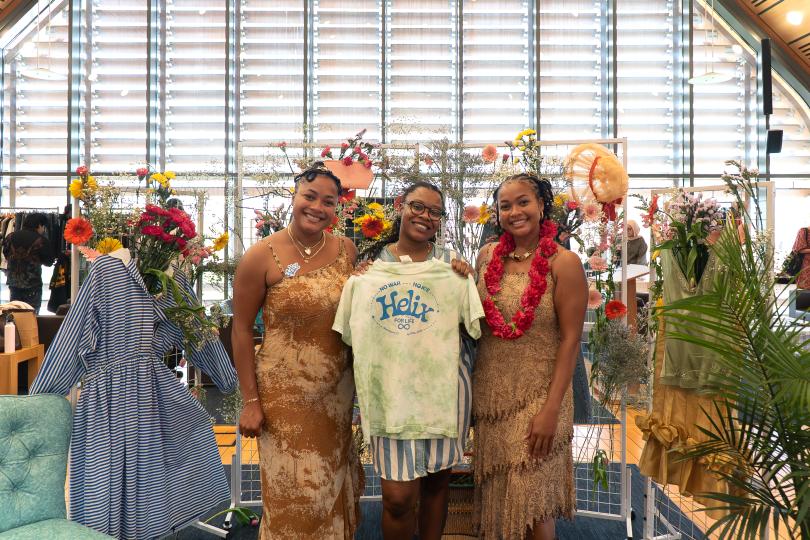
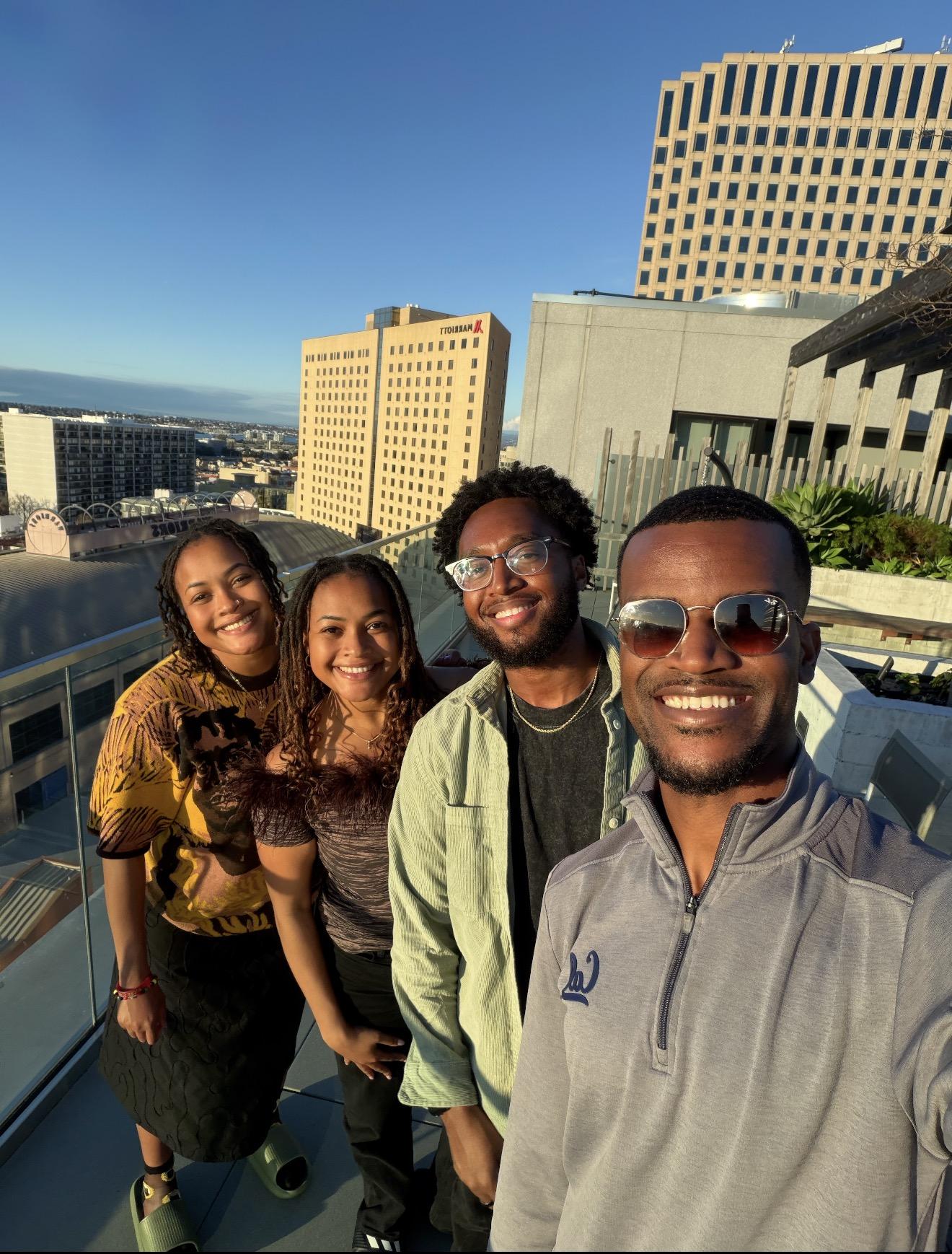
Mica (left) and Maya (right) Caine's business Helix launched in New Haven, CT this April. Helix is a city-based “platform marketplace that reimagines fashion resale.”
Maya and Mica Caine are social entrepreneurs working to change the world of fashion. Through their innovative clothing resale marketplace, Helix, the sisters are transforming the business model of fashion to one of circularity, stories and connection.
Reimagining the relationships between consumption and nature, and between profit and communities is critically important for people and the planet. Over-production and over-consumption of clothing drives waste colonization, labor exploitation, water pollution, and environmental degradation across the world, and especially in the global south. We currently have enough clothing for the next six generations, but the business model of fashion rewards production of new items and constant growth.
After completing business undergraduate degrees at Indiana University in 2018, working at Nike, working at Pinterest, and founding Mive, a “made-to-measure slow fashion marketplace,” the Caine sisters realized the greatest opportunity to reduce fashion's harm was not to produce more new clothing, but to extend the life of the garments that already exist. Through “unlearning what business ‘should’ look like”, the idea for Helix was born. Maya and Mica went to Yale and MIT (respectively) to hone their vision for Helix as a fundamentally different approach to entrepreneurship. While in graduate school, they were both 2025 Switzer Fellows.
Helix is a city-based “platform marketplace that reimagines fashion resale.” Helix helps people discover, buy, sell, and rent clothing locally. By turning garments into living archives that carry stories and memory, Helix extends the life of what already exists and connects people through what they wear. Helix launched in its pilot city of New Haven, CT in April 2026. Now the sisters are growing Helix “at the speed of trust” from city to city across the country, starting with New York City this summer. If you’re interested in connecting with them as Helix rolls out, reach out at info@helixcommons.com.
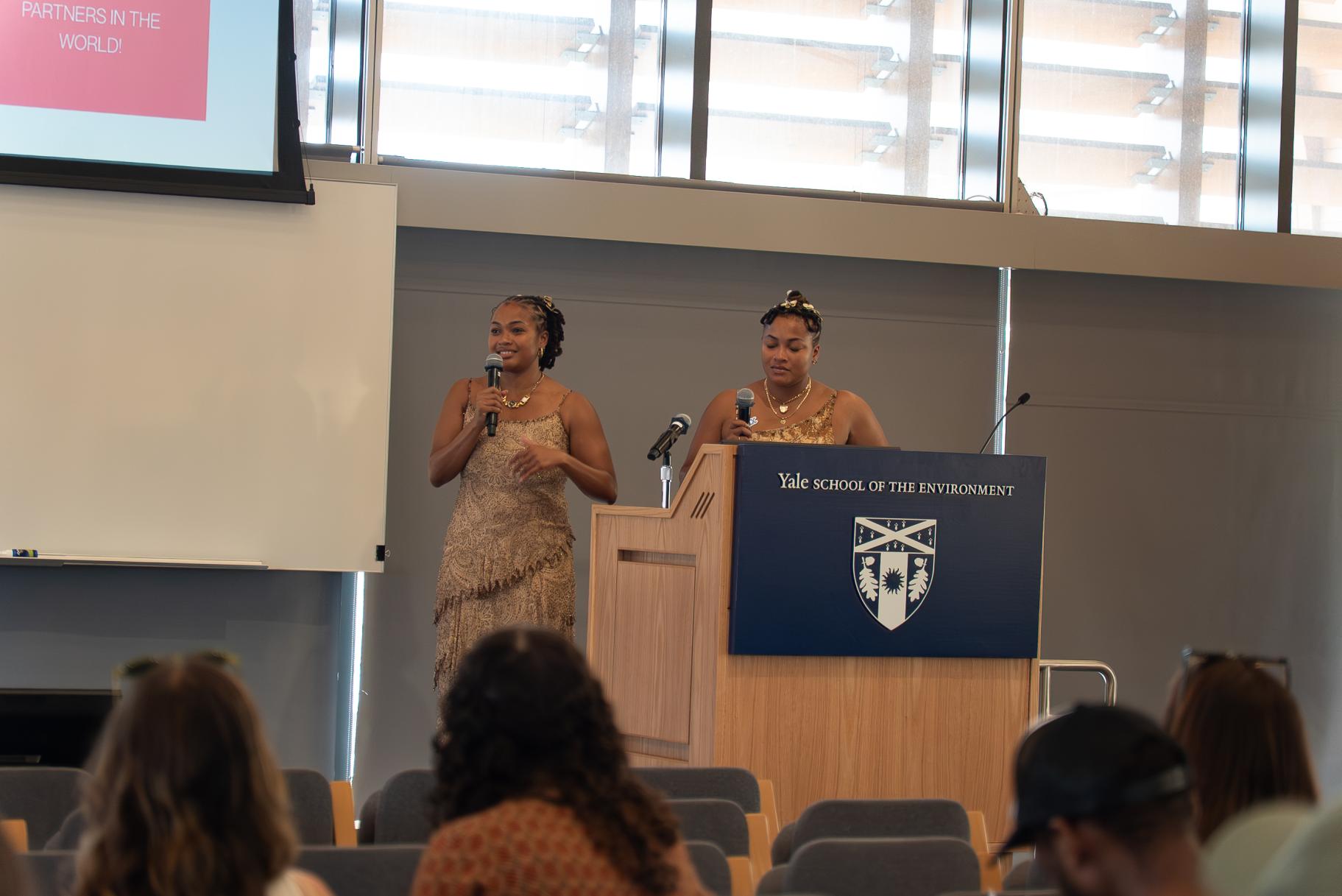
As founders committed to building Helix as part of a Just Transition, Maya and Mica have made the intentional decision to reject venture capital funding. They are committed to growing at a pace that allows them to maintain their values and build toward cooperative ownership, rather than the expectations of rapid growth and financial returns associated with venture capital. They are starting a crowdfunding campaign this summer to support sustainable, values-aligned growth and are seeking other non-dilutive funding sources.
Cora Preston spoke with Maya and Mica after their New Haven launch to learn more about the stories, examples and experiences that inspire them, the impact of status-quo fashion on the environment, and what the future of fashion will look like if we get it right. Read on for our lightly edited interview.
Cora Preston: Can you describe Helix and how it works?
Maya Caine: Helix is a fashion platform marketplace that reimagines fashion resale. We do this in three ways. One, by turning garments into living archives and tracing the human stories and memories behind each garment as it circulates to new owners.
The second aspect is anchoring fashion in local exchange and networks of care. So we are not shipping all over the country, we are helping people discover existing clothing in their own city, their own community. We unify garments from personal wardrobes, vintage stores, resale shops, curators, but we also are distinct because we incorporate local care services, such as tailors, menders, dry cleaners. Just as easy as it is to discover items in your city, it's the services that also extend the life of clothing.
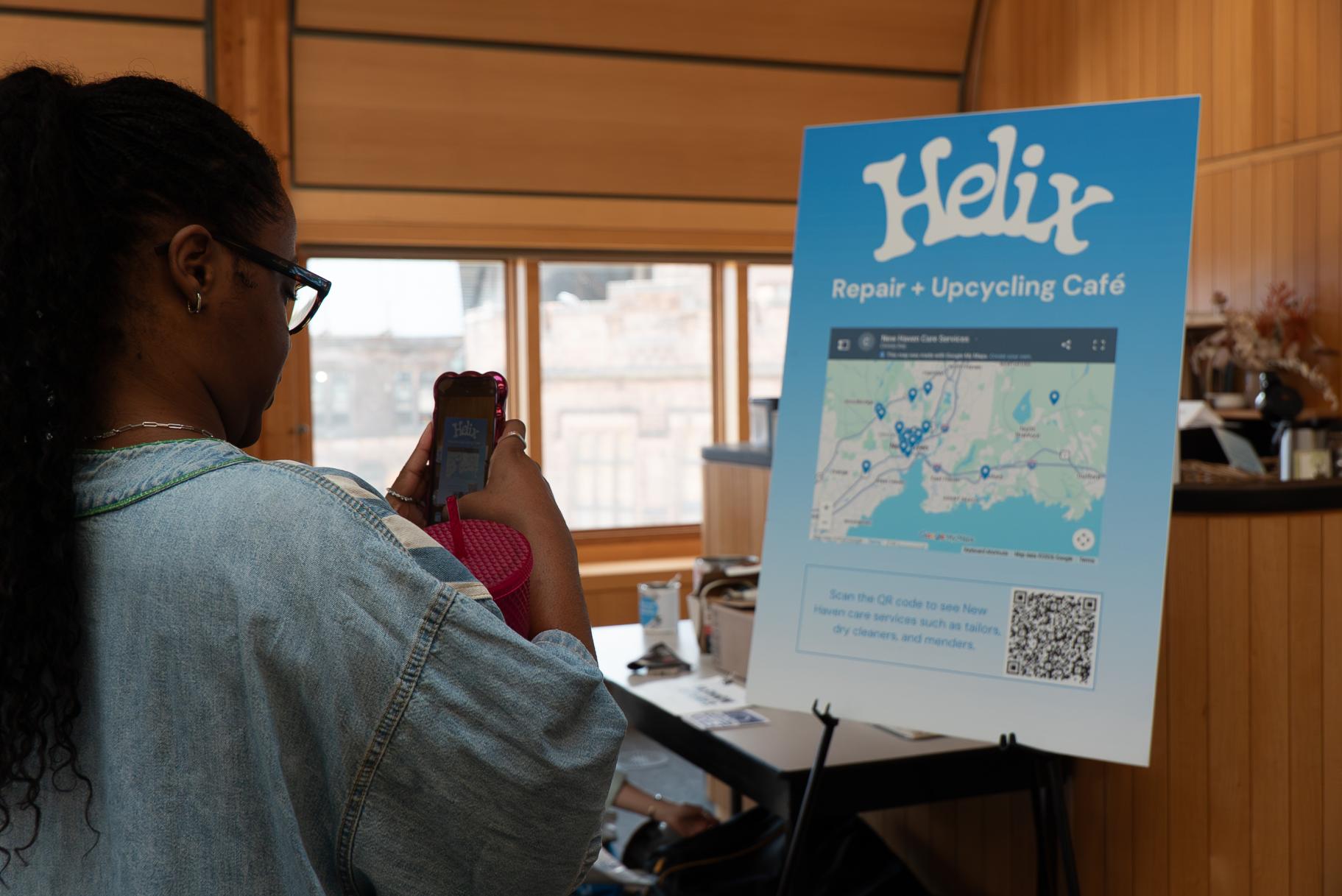
The last part of how we're reimagining resale is by aligning financial incentives towards longevity. We're introducing this concept to fashion called the Infinite Commission Model - almost how royalties work in the music industry. When you list something on Helix, every time it's resold or rented in the future, the percentage of that money goes back to the original owner. Every person who sells on Helix can generate passive income from the longevity and continuous use of their garment. The language we’re using is about bringing provenance to garment resale. Right now Helix is on the App Store, and we will hopefully be on Google Play Store soon.
Talking about provenance and stories, is there a garment in each of your collections whose story you would be interested in sharing?
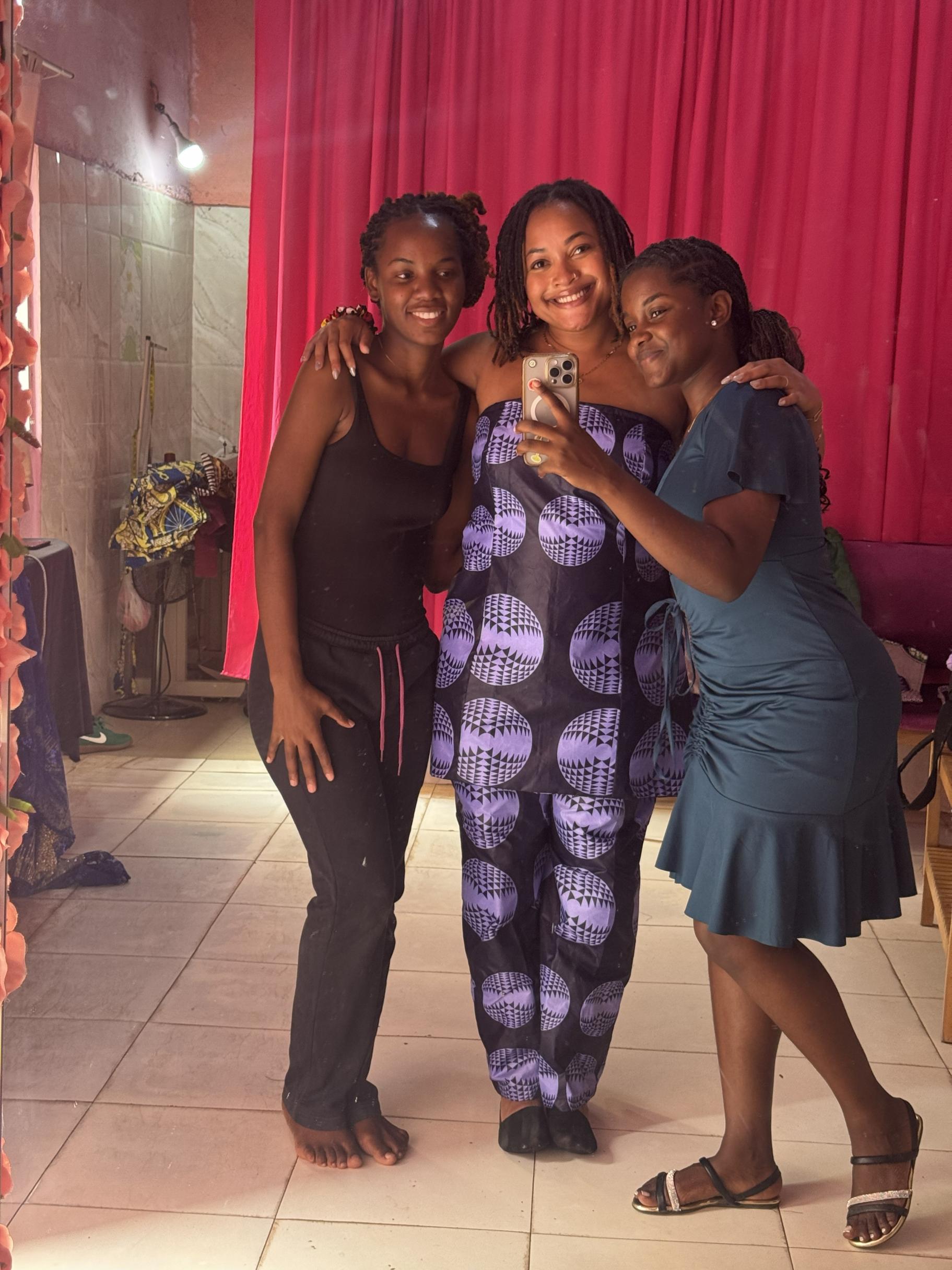
Mica Caine: In January, I went to Angola, through a study abroad program through MIT, and I was able to find a fashion designer, named Telma, who's the founder of Atelier Capricia.
She said, “you find the fabric, I'll make the custom piece for you”. I found this fabric in the Mercado do Artesanato market. It was blue fabric that had this very ornate circular design with triangles within it. It really reminded me of the speculative fiction story I’m writing that was also part of my thesis. She created this two-piece set for me. I had one made for my mom and my sister as well. So that's, like, my most cherished item in my closet right now.
Cora: The circular design is like the circular economy too.
Mica: Right.
Maya: And for me, I have a few pieces all from the brand Caché . It’s a brown top with faux feathers around the neckline. It’s funny, my mom had the same exact top when we were growing up. I love the brand. I rent vintage pieces on Helix, and I've been collecting bits and pieces from Caché, because it reminds me of my mom and how she would dress when we were growing up. It feels really special to be wearing some of the pieces she wore when she was younger.
Is there a moment or experience that sparked the idea for Helix?
Mica: Before Helix, Maya and I's first venture was called Mive. We were a made-to-measure slow fashion marketplace. At the peak, we had 22 independent designers all over the world, from LA, New York, Berlin, Florida, Barcelona. The whole goal for that marketplace was for folks to be able to ditch standard sizing, because we're more than integers. We were really wanting to kind of create a culture of custom fit with intentional designers that shared our passion and vision for slow, ethical fashion. So that's what we were doing beforehand, and there were so many learnings that came out of that. Maya can speak to how we went from Mive to Helix, but it was really that experience of launching that platform where we asked okay, how can we do this better?
Maya: It was interesting, because at the height of Mive we were just understanding how much marketing and trying to get people to buy something new took so much. Knowing that there's enough clothing to clothe the next 6 generations, we were like, this feels wrong, even with stuff that we think is great. We had 300-plus perfectly fitting garments, but pushing new consumption just didn't feel like it aligned with the moment we're in right now, with this culture of wastefulness in fashion.

We asked ourselves, how can we best utilize garments that are already in existence?
Maya Caine
That’s when we transitioned Mive to MiveLabs, where we did a lot of textile waste work in our hometown of Columbus, Ohio. We conducted a textile waste mapping exercise to understand where waste was being generated and how garments moved through our city. We discovered that outside of e-commerce, most clothing already circulates locally. People buy, sell, repair, and share garments within their own communities, where trust and relationships naturally exist. That's why we decided to focus on the locality, no shipping, and finding stuff within your own community. It's also better for the environment in terms of low-carbon transactions, not shipping across the world for every little thing.
Going back to the three pillars of Helix we mentioned earlier, the storytelling piece grew directly out of our own relationships with clothing and the stories people shared with us about theirs. We did over 60 interviews with people who bought pre-owned clothing, and we were actually shocked that most people said that when they go to the thrift store, they wonder, who wore it before me? There is so much excitement about the potential story and narrative of resale with Helix. If you currently shop at a thrift or vintage store or the online platforms, you have no idea the story behind these garments.
The stories are very rich. We live our lives through our clothing. We were inspired by the role of of provenance in the art world. Many high-value works are accompanied by a detailed record of previous owners, exhibitions, and collections, preserving the story of how the piece has moved through time.. The provenance directly contributes to the monetary and emotional value of an art piece, creating a greater sense of attachment and care. We thought, how can we apply that to fashion?
So that’s a very long answer. There were multiple different things. It's a systems thinking exercise: How do we better value our clothing, keep it in circulation longer, and facilitate exchange in ways that strengthen local communities? And that all was inspired by different aspects of our lives.
As recent business graduates founding Mive, we went through a lot of unlearning around what business ‘should’ look like. That's a really important part of our journey, and what led us here, too.
Mica Caine
You've touched on this in a couple ways already, and it seems obvious to me that fast fashion is terrible for the environment. What else would you like to say about the environmental benefit of creating a new system like Helix, in comparison to the status quo?
Mica: We can see the harms of fashion. It's the scale of its overproduction, driven by the linear business model. Fashion corporations only make money from the first sale of a garment, right? Some brands are trying buyback programs, but those directly challenge their business model. They’re required to grow quarter over quarter, so that means production of new clothes.
So that's why we have those six generations of clothing that are supporting waste colonialism and the bailing of pre-owned clothing that's going to Kantamanto Market, Pakistan, Kenya, all across the world, creating waste landscapes from textile. Textile waste landscapes that are not only stifling the local fashion economies of those places, but also polluting. It also extends to waste water from dyeing of garments. Twenty percent of global wastewater comes from the textile fashion industry.
In terms of human impacts, most garment workers globally are women, and 90% of those women are not being paid a living wage. There is this human and labor exploitation that's happening on top of water pollution, on top of land pollution.
As we’re building this new alternative, we’re figuring out, if we know that enough clothes already exist, how can we best circulate them locally to decarbonize? So people don't have to ship from all across the world. Reducing the demand for new production through resale markets is also a goal.
Maya: On that note, a study done here at Yale showed that 59% of people who bought pre-owned clothing actually are directly linked to buying an increase of new clothing. So right now, the culture of resale is actually fueling overproduction, it's not reducing it.
We talk a lot about new fashion production and the harms of that, and resale right now is just reinforcing it. So, how do we be honest about resale? It shouldn't just be a blanket solution for fashion when it's not actually getting people to not buy new. That's something we’re working to combat as well.
Cora: I suppose people sell or donate stuff, and then they just go out and buy more? It’s a free pass to go get more new stuff.
Maya: When people are saving money buying pre-owned, then they think, oh I have more money, let me go buy some new items. The concept of spring cleaning is making a way to buy new stuff as well. It's not just decluttering your life in the new season, but big corporations are using that to open the doors for people to buy new. So honestly, a lot of this is psychological. Before graduate school, I worked at Nike and saw firsthand how they manufacture desire and mentally manipulate consumers to get us to buy things. It's honestly, very scary… but that's what the endless growth machine demands.
Mica: I think in terms of how we're trying to truly transform consumer behavior, it is changing that culture of what it looks like to exchange with another human face-to-face. Right now e-commerce has normalized faceless and placeless exchange, and that hyper-convenience erodes social connection. At the same time, the popularity of Facebook Marketplace shows that people still find joy in discovering something nearby and picking it up directly from another person. We are hoping to shift culture back to that norm.
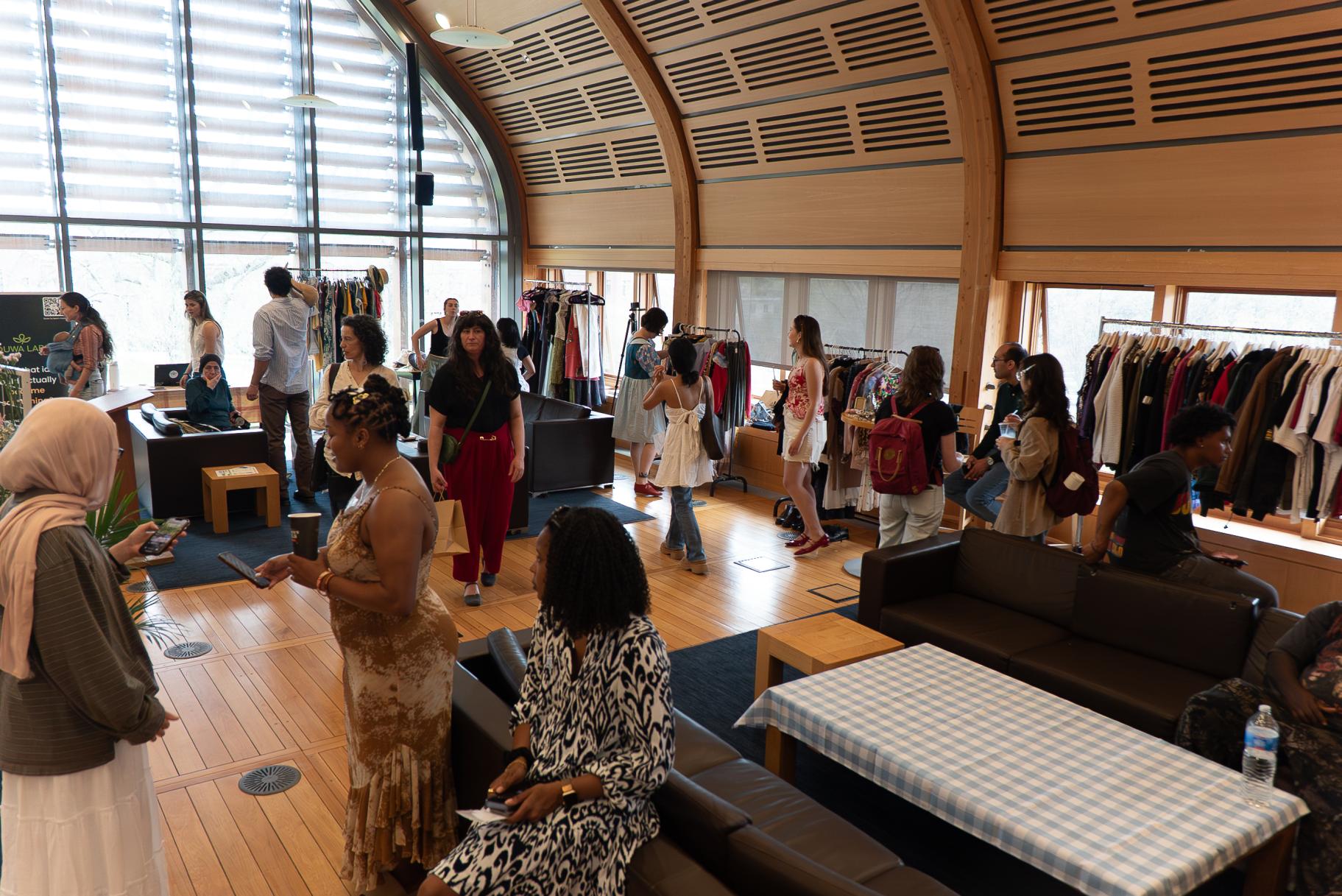
Maya: To connect it back to Switzer, one of the core leadership principles we took from the retreat was moving at the speed of trust. We see Helix as a way to bring that principle into fashion by rebuilding trust through community-centered exchange.
I’ve heard you talk previously about how start-up spaces, even when they say they're different, seem to default to extractive capitalism. What is something that's helped you persevere when you're encountering these systems that are trying to push you back towards what is standard right now?
Maya: It’s really interesting. As recent graduates of our programs, we're getting all of this knowledge about why these extractive and exploitive systems are what they are. Then, we are told in these entrepreneurship spaces, this is what good business looks like. We’re told that we need to shape our businesses around getting vc funding and a big exit. We're like, whoa, whoa, whoa, we know this is part of the problem.
We’re finding a lot of inspiration that we don't have to abide by that model. There are a lot of amazing cooperatives and organizations with democratic ownership and governance that are outside of this dominant status quo of trying to make a lot of money for a small amount of people. Our big tenet is the people who participate in Helix should be the ones that benefit from it, not distant investors. Not who the status quo tells us that we have to cater to as founders. Finding inspiration from those organizations has been great.
Mica: What those relationships specifically look like for us - I collaborate a lot with the Dudley Street Neighborhood Initiative, a community land trust. I also participated in the Assembly of Black Possibilities hosted by the Boston Ujima Project, which was a gathering of many different cooperatives, land trusts, and people building community investment vehicles. Within elite institutions there's a thirsty alumni base of VC investors, and they want first access to the talent pipeline. I think the university is trying to cater to them and build a pipeline of our students to get investment from this alumni base, but those investors don’t typically represent alternative financial institutions that don’t focus on hypergrowth over everything.
Leaving these echo chambers was really important for us, because when you go and see the work that people are doing grassroots, it shows you that the status quo venture path is very much optional.
We always say “free will”. If everyone's going this way, we have free will, and we can go another way.
What does fashion look like if we get it right?
Cora: This question is inspired by Ayanna Elizabeth Johnson. She talks about how there’s all this doom and gloom messaging out there about climate and the environment in the media and psychology right now. She encourages us to tell stories about what if we get it right? What does it look like if we do this the right way, that does take care of our climate, and our people? I think it’s beautiful to put those stories out there into the world in order to have those exist as options we can work towards.
Maya: What it would look like if we got right is, one, we value our clothing more. This is not a disposable commodity, it is a storied artifact that holds meaning. It can hold our human stories together. Also, it can be circulated. We can cherish it and share it. If an item is just sitting vacant in your closet, that means it can meet someone else's needs.
It's valuing, it's sharing, and then ultimately, it's building community and shared prosperity.
The people who participate in the system are the ones that actually benefit from our platform. What if all the surplus created from Helix and what we're building can be shared with the people who actually participate in it, not distant investors who would be looking for us to sell to a big player, or to go public.So it's a different value system. All these things come together in a way that meets our collective needs and creates a non-exploitive system.
Mica: I would add that locality is a big thing. We know that the fashion industry today is extractive and one of the most polluting industries is because of overproduction, because clothing is not valued. It’s seen as a linear, wasted commodity. Bringing back spending locally really supports shared prosperity, strengthening local fashion ecosystems, and reducing carbon emissions. Everything Maya said, and rooted in community.
What's next for you both as you're graduating, and for Helix?
Maya: After our pilot in New Haven, I will be moving to New York City at the end of the summer to launch Helix there, and I'll be working on it full-time.
Mica: Most immediately I'll be in Georgia, but I'll be coming back to join Maya in the Northeast for Helix-related launch activities. We're really excited about just taking Helix on the road. Our strategy is going to various different fleas, being with the people, being outside. Like we said, the goal is to move and expand at the speed of trust.
So we're really excited for our pilot here in New Haven. Within 24 hours, we had our first cohort of sellers sign up for our launch, because this is a very networked space. The curators, the resale stores, they all know each other. We’re excited to be able to foster those relationships in different cities. We’re also launching a crowdfunding campaign that will support that expansion...
Maya: … to New York City. We made a very strong boundary to never accept venture capital funds. Honestly, we are trying to retain as much ownership as possible, because our goal is to commit Helix to a purpose trust, locking in our values and boundaries that reject extractive and exploitive business practices from the very beginning. We don't want to have any sort of dilutive funding that would prevent us from giving full ownership to the trust. We’re trying to find mission-aligned funding in this stage, and we're starting with the crowdfunding campaign.
What else do you want to share?
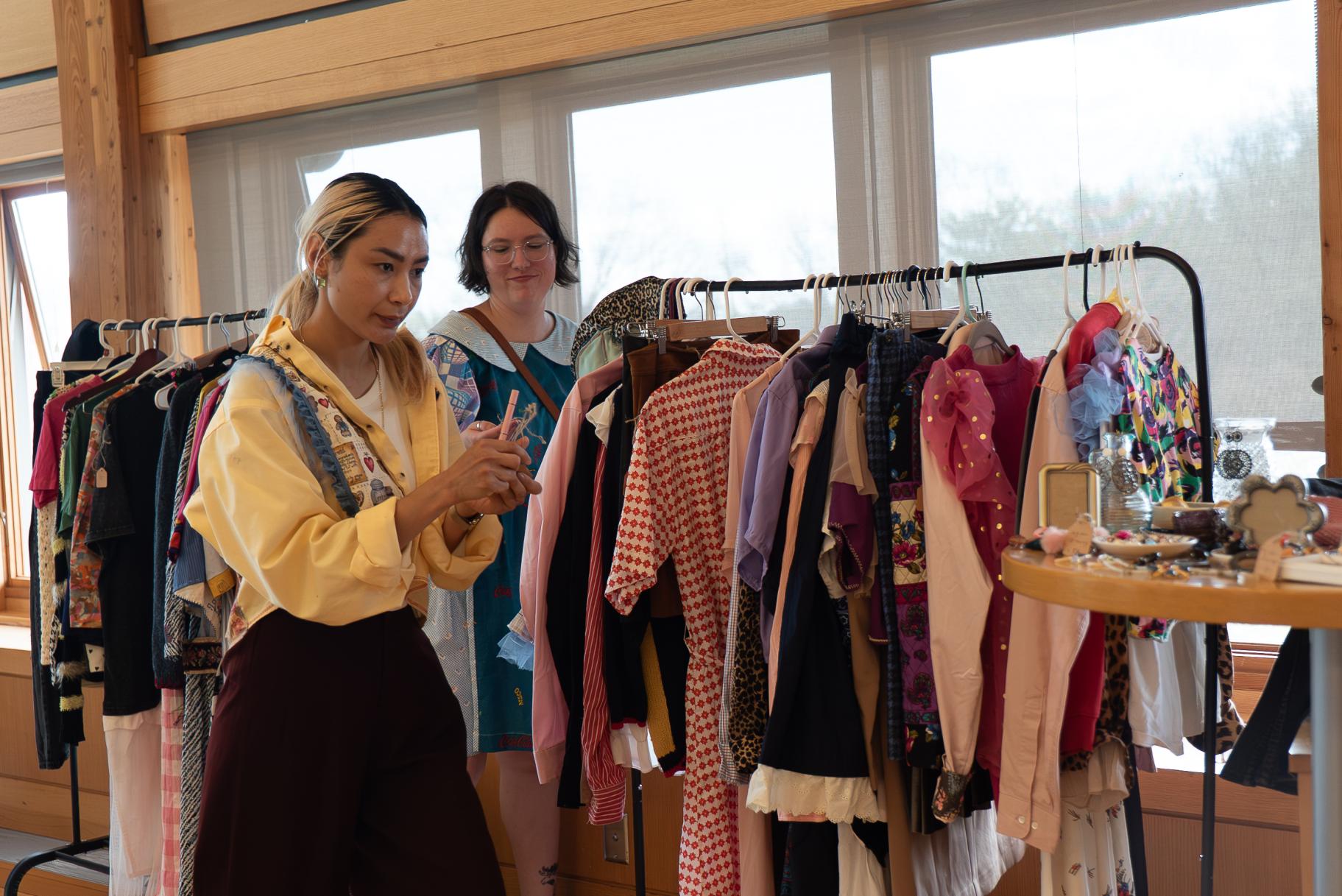
Mica: We had a few Switzer Fellows that came and supported our launch. The Switzer Network really showed up for us, and our 2025 cohort has been especially supportive in this process. We're really, really grateful to navigate these early years with them.
As we prepare to launch Helix in New York City, we'd love any introductions to resale stores, flea markets, or local slow fashion practitioners. If someone comes to mind, we'd be grateful for the introduction. Also, please consider donating to our crowdfunding campaign to support our work. If you would like to connect, please email us at info@helixcommons.com and if you are on Instagram, please give us a follow @helixcommons.