

Meet the 2026 Switzer Fellows
We are excited to welcome the 2026 Switzer Fellows to the Switzer Network! Read about this year's cohort and their work below. To find information on fellowship alumni, please visit the Fellow Directory where you can search by name, region, and area of expertise.
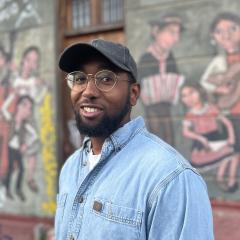
Charlston Britton
Rhode Island School of Design, MDes, Adaptive Reuse
Charlston Britton is an architect, and RISD Presidential Fellow from New Orleans whose work is deeply shaped by the legacy of Hurricane Katrina. Pursuing a Master of Design in Adaptive Reuse with a concentration in Nature-Culture-Sustainability Studies, his work and research explore the intersection of craft and resilience through spatial interventions.
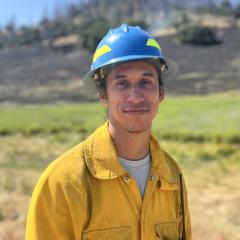
Nicolás Cruz
UC Santa Cruz, PhD, Ecology and Evolutionary Biology
Nicolás is a fire ecologist and fire practitioner who studies the reintroduction of Indigenous cultural burning in two of California’s ecologically and culturally important ecosystems: tule wetlands and oak woodlands. His applied research is driven by a desire to support Indigenous-led restoration and advance tribal sovereignty while broadly addressing the ecological impacts and ongoing history of settler colonialism.
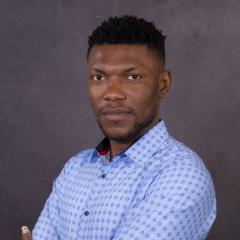
Christopher Ihinegbu
UC Irvine, PhD, Urban and Environmental Planning and Policy
Christopher Ihinegbu's research integrates environmental justice into wildfire and flood resilience, focusing on practical approaches to facilitate cascading resilience. His work aims to inform environmental advocacy and translational science by promoting leverage for equitable disaster resilience. As a Climate Justice Champion with the Climate Action Campaign, he advocates for equitable climate solutions.

Thomas King
MIT, MArch, MCP, Environmental Design, Policy, and Planning
Thomas Hyo-min King is an environmental designer and urbanist from rural Nova Scotia, Canada. His work focuses on strategies for delivering building rehabilitations and energy infrastructure that improve extant living conditions while reinforcing energetic and economic democracy among disinvested building populations.
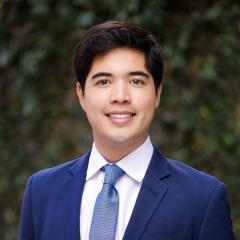
Nicolas Lama
Stanford University, JD / MS, Law / Environment and Resources
Nicolas Lama is pursuing his JD and MS in Environment and Resources at Stanford Law School and Doerr School of Sustainability, where he focuses on environmental law, ocean justice, and climate resilience. Inspired by his upbringing in south Florida and his deep connection to the ocean, Nicolas is passionate about using legal and policy tools to support frontline communities and protect natural ecosystems in the face of the climate crisis.
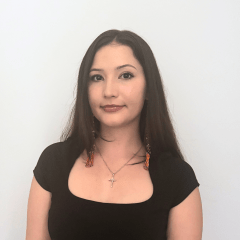
Jasmine Lamb
University of Maine, PhD, Ecology and Environmental Sciences
Jasmine Lamb is a member of the Passamaquoddy Tribe at Pleasant Point and a current PhD Candidate in Ecology and Environmental Sciences at the University of Maine. Jasmine has worked in environmental justice for Wabanaki Tribal Nations and founded the Sipayik Resilience Committee to support citizen-led tribal resilience initiatives, including increasing access to energy efficiency and renewable energy technology and other climate resilience actions.
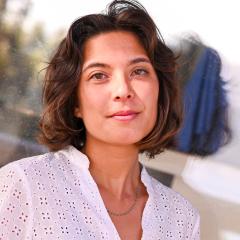
Marina Luccioni
Stanford University, PhD, Biosciences
Marina Dewinara Luccioni is a Corsican-Indonesian ecologist and experimental film-maker studying human and environmental health. Her PhD dissertation focuses on using chemical and molecular ecology in support of community-based and Indigenous ecological governance in Corsica, Hawai’i and California.
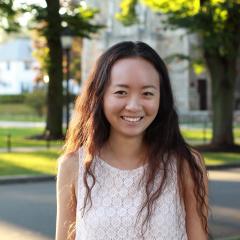
Jenna Mu
Harvard University, DMD, Dental Medicine
Jenna is a Doctor of Dental Medicine student and environmental advocate based in Boston. She is passionate about constructing sustainable health care systems that expand access to care while reducing the environmental pollution associated with treatment. She aspires to become a dentist and policymaker that tackles health inequities and environmental degradation simultaneously.
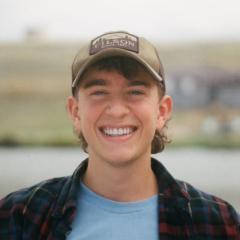
Jackson Newman
Yale University, MEM, Ecosystem Management and Conservation
Jackson is a master’s in environmental management candidate specializing in ecosystem conservation and management at the Yale School of the Environment. Jackson is particularly interested in private lands conservation, prairie plants, commodity markets, land ownership, ecological restoration, and lots more.
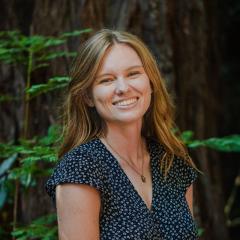
Isabella Ossiander
UC Santa Cruz, MS, Coastal Science & Policy
Isabella “Izzy” Ossiander is an interdisciplinary scientist enrolled in the Coastal Science and Policy Master’s Program at UC Santa Cruz who is studying marine bycatch technologies and methods that are practical for fishing communities and equitably distribute the impact of this deployment.
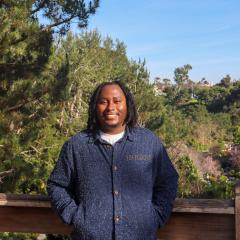
Jessie Parks
University of Southern California, MS, Urban Planning
Jessie Parks is a community organizer and emerging urban planner focused on environmental justice and equitable development. They are pursuing a Master of Urban Planning with a concentration in Climate Change and Sustainability at the USC Sol Price School of Public Policy. Jessie’s work centers on reducing air pollution, advancing decarbonization efforts, and supporting community-led advocacy.
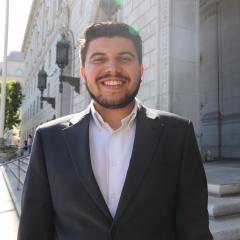
Ben Regas
UC Berkeley, JD, Law
Ben is an aspiring litigator and policy advocate interested in intersectional racial, environmental, and economic justice work. Ben is particularly interested in expanding holistic legal services models to include environmental justice principles and concerns and the unique roles and responsibilities of state and local governments in pursuing environmental justice enforcement and affirmative litigation.
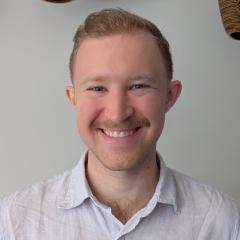
Justin Saint-Loubert-Bie
Yale University, JD, Law
Justin Saint-Loubert-Bie is third year student at Yale Law School, where he is a student director of the Environmental Justice Law and Advocacy Clinic, and was a co-president of the Yale Environmental Law Association and co-chair for the 2026 New Directions in Environmental Law Conference. Justin is interested in working at the intersection of environmental and Tribal issues, and particularly on questions that touch on land use and the clean energy transition.
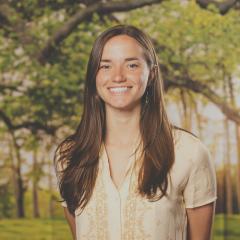
Chloe Schneider Johnson
UC Berkeley, MPP, Public Policy
Chloe Schneider Johnson’s work is guided by the conviction that environmental crises often stem from misplaced priorities and concentrated power that leave social and environmental sacrifice zones in their wake. She aims to leverage policy for community use to defend the universal right to health and connection with local ecosystems. She currently works in the space of wildfire resilience, advancing sustainable rural stewardship economies and supporting Indigenous-led, place-based approaches to land restoration.
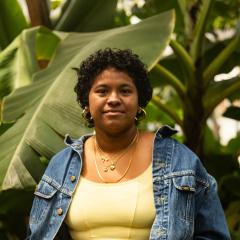
Yadira Silva Rios
University of Rhode Island, PhD, Biological and Environmental Sciences
Yadira Silva Rios is a first generation doctoral student, youngest daughter of Ecuadorian immigrants, born and raised on Staten Island, NY. Growing up fishing and clamming, gardening, and cooking up feasts for her family drew her to a career in food. With her PhD, she is exploring how sustainable food futures are defined within environmental sciences, and how the Latin American and diaspora experience may be misrepresented within it. She hopes to encourage the use of community-led definitions of sustainable food futures.
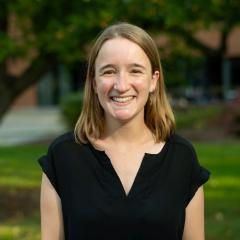
Leslie Spencer
University of Vermont, PhD, Food Systems
Leslie is an ecologist, educator, and naturalist studying wild pollinators in Vermont. Before moving to Vermont, Leslie studied wild pollinators in Costa Rican forests and coffee farms, Minnesota prairies, and the urban wilds of Boston. She is also a Vermont Master Naturalist and serves on the Vermont Pollinator Working Group steering committee.
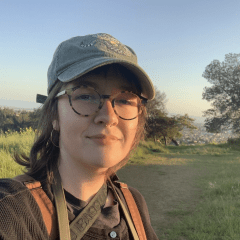
Maddie Taylor
UC Berkeley, PhD, Environmental Science, Policy & Management
Maddie Taylor is a disabled researcher studying climate change impacts on disabled communities, committed to producing work that centers disabled people as experts whose knowledge should inform climate adaptation.
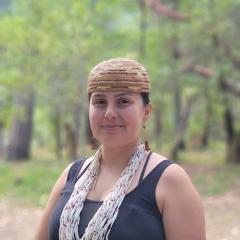
Brook Thompson
UC Santa Cruz, PhD, Environmental Studies
Brook M Thompson is a Yurok and Karuk Native American Ph.D. candidate at UC Santa Cruz ENVS, scientist, civil/ environmental engineer, children's book author, water activist, and artist. Thompson's areas of expertise includes Chinook Salmon on the Klamath, environmental justice, restoration theory, and Indigenous Traditional Ecological Knowledge.

Destiny Treloar
Yale University, PhD, Environmental Science
Destiny Dynella Treloar is a proud first-generation Nicaragüense woman from Miami. She is fiercely committed to advocating for the well-being of Latine communities, addressing the structural drivers of nutritional insecurity, and developing meaningful solutions to modulate environmental health disparities in her home communities. Destiny is a PhD candidate at the Yale School of Environment.
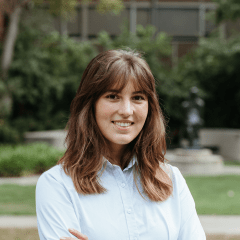
Melisa Walk
UCLA, MS, Urban and Regional Planning
Melisa Walk is an environmental justice advocate, researcher, and community organizer from Ventura County with deep roots in the Northeast San Fernando Valley. Her work focuses on the intersections of plastic pollution, climate justice, and community-led planning. Grounded in both policy and grassroots organizing, she is committed to building healthier, more equitable communities through public engagement, research, and movement building.