

Yadira Silva Rios
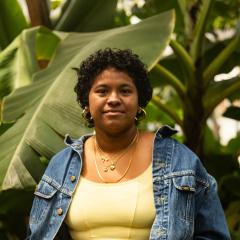
About Yadira's Work
I am a first generation doctoral student, youngest daughter of Ecuadorian immigrants, born and raised on Staten Island, NY (what was once known as Aquehonga Manacknong to the Lenape people). It was my experience growing up fishing and clamming on NYC's coast, gardening in pots and in small lots in our backyard, and cooking up feasts for 20+ family members that drew me to exploring a career in food. I obtained a BBA in Entrepreneurship Management at Baruch College with an interest in food and hospitality careers. However, I eventually went on to obtain a dual masters degree from Prescott College, an MBA in Sustainability Leadership and an MS in Sustainable Food Systems. While pursuing my masters, I felt it crucial to gain hands on experience within community organizations, so I signed up to farm at a non-profit farm in Ancram, NY, worked in a major food pantry in Manhattan, and finally at Staten Island's botanical garden. This culmination of experiences paired with my volunteer work with One Love Community Fridge affirmed my belief in grass-roots efforts and community led research towards a just, sustainable food future.
I am currently pursuing a PhD in Biological and Environmental Sciences, with a concentration in Sustainable Agriculture and Food Systems, focused on exploring how sustainable food futures are defined within environmental sciences, and how the Latin American and diaspora experience may be misrepresented within it. As a transdisciplinary project, I am mostly drawing from Rural Studies, Latinx Geographies, Anthropology, and Science and Technology Studies to demonstrate the heterogeneity of Latinidad across the Americas through their farming and land-based livelihood practices
As a first generation student, an Afro-Latina in an overwhelmingly White institute, and a social scientist in a majority natural science program, I have also worked to find a space where I can fit in. This has translated into creating a graduate student organization that is working to build peer-to-peer mentorship, networking opportunities, support systems, and more for other first-generation and under represented students in STEM. I am also dedicated to building other informal spaces for BIPOC scientists to build community with each other within this isolated space.
Drawing from my numerous experiences, I hope to encourage the use of community-led definitions of sustainability and sustainable food futures. I aim to follow models of other professors across the United States that I have met who are both farmer and professor, and demonstrate the diversity of what it means to be a scientist while also encouraging the need for more deeply engaging with lived experiences of marginalized communities within the environmental sciences.