
Creating Place-based Curriculum to Connect Students with the Mystic River Watershed
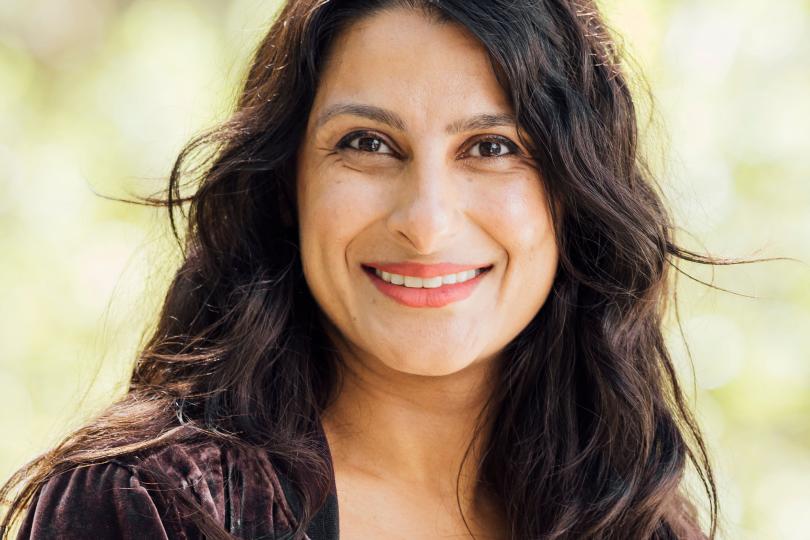
Meghna Marjadi will create a set of place-based and experiential learning curriculum for environmental science students, with a focus on highlighting local environmental justice issues in a heavily urbanized watershed, in partnership with the Mystic River Watershed Association (MyRWA) and Bunker Hill Community College (BHCC). This curriculum aims to root environmental courses in community impacts and local connections to better support the learning needs of college students from diverse backgrounds and help them feel welcome in the environmental field.
Environmental science lacks diversity and one of the keys to finding environmental solutions is allowing more people at the table. Our planet faces multidimensional environmental challenges that necessitate collaboration across disciplines and backgrounds. Yet, historically marginalized groups have often been excluded from scientific and policy discussions related to environmental issues (Otto et al. 2017). In fact, environmental science is among the least diverse STEM fields when considering race, gender, disability status, sexuality, and class (Beck et al. 2014, Kou-Giesbrecht 2020, Bowser et al. 2021, Cech 2022). The importance of engaging people from historically marginalized backgrounds in environmental science is underscored by evidence that these populations are disproportionately impacted by climate hazards and often suffer the most detrimental impacts (Thomas et al. 2019).
“This project idea builds directly on my teaching experiences and research that I have conducted to better understand why students and researchers from ‘historically marginalized backgrounds’ choose to enter environmental science fields (Marjadi et al. 2025),” Meghna shares. The research indicates environmental science courses that approach the topic from a holistic, community-based, and place-based perspective may better support students from historically marginalized backgrounds and allow them to feel more comfortable in the field (Schusler et al. 2021, Marjadi et al. 2025). Based on these results, Meghna has already been making efforts to incorporate social and environmental justice, urban ecology, and local impacts in her courses at BHCC.
“Teaching gets me excited and I enjoy designing new curricula and programming, but have not had the chance to explore this option formally,” Meghna writes.
This project gives me an opportunity to apply findings from previous research to a real-world situation and to make an impact.
Meghna Marjadi
The curricula will include hands-on activities and allow local community college students to engage with the local watershed, engage with watershed scientists, and collect and analyze data to support ongoing research and monitoring. Modules covered will include water quality, air quality, fish and animal migration, and climate resilience, as well as a peer-reviewed manuscript on its implementation and success. The curricula will be used at BHCC, and be open-source and freely available for implementation at other institutions.
Located in greater Boston, Massachusetts, the Mystic River watershed is the most urbanized in New England and spans 76 square miles from Reading to the Boston Harbor. MyRWA is a non-profit organization that works to protect and restore the Mystic River, its tributaries, and watershed lands for the benefit of present and future generations. BHCC is a minority-serving institution and the largest community college in the state, located in Charleston MA. Many BHCC students live within the Mystic River watershed.
Throughout this project, Meghna will lead the development of educational materials, while also gaining experience in teaching and curriculum development, education research, working with a non-profit organization, and building partnerships across educational institutions.
Teaching and engaging with my students has been a shining light and I am very excited to implement this project.
Meghna Marjadi
In the short term, this project allows the MyRWA to expand engagement with the local community to bring awareness to pressing environmental issues to support solutions. Through this program, students will have the opportunity to develop a stronger connection with their local watershed. At the same time, MyRWA will have an opportunity to invite these students to the table to participate in programming, support watershed activities, and potentially be involved in solving environmental problems in their communities. In the long term, this type of engagement could contribute to diversifying the field and bring new perspectives to solving environmental problems.
References
Content and references for this story are excerpted from the original grant proposal created by MyRWA, BHCC and Meghna Marjadi.
Beck C, Boersma K, Tysor CS, Middendorf G. Diversity at 100: women and underrepresented minorities in the ESA. Front Ecol Environ. 2014;12(8):434-6. https://doi.org/10.1890/14.WB.0112
Bowser G, Cid CR. Developing the ecological scientist mindset among underrepresented students in ecology fields. Ecol Appl. 2021;31(6):e02348. Pmid:34181297. https://doi.org/10.1002/eap.23483
Cech EA. The intersectional privilege of white able-bodied heterosexual men in STEM. Sci Adv. 2022 Jun 15;8(24):eabo1558. Pmid:35704581. https://doi.org/10.1126/sciadv.abo1558
Kou-Giesbrecht S. Asian Americans: the forgotten minority in ecology. Bull Ecol Soc Am. 2020;101(3):1–5. https://doi.org/10.1371/journal.pone.0318438
Marjadi MN, Smith RA, Tu HF, Ajmani AM, Holland AR, et al. (2025) Centering voices of scientists from marginalized backgrounds to understand experiences in climate adaptation science and inform action. PLOS ONE 20(2): e0318438. https://doi.org/10.1371/journal.pone.0318438
Otto IM, Reckien D, Reyer CPO, Marcus R, Le Masson V, Jones L, et al. Social vulnerability to climate change: a review of concepts and evidence. Reg Environ Change. 2017 Aug 1;17(6):1651–62.
Schusler TM, Espedido CB, Rivera BK, Hernández M, Howerton AM, Sepp K, et al. Students of colour views on racial equity in environmental sustainability. Nat Sustain. 2021;4(11):975–82.
Thomas K, Hardy RD, Lazrus H, Mendez M, Orlove B, Rivera-Collazo I, et al. Explaining differential vulnerability to climate change: a social science review. Wiley Interdiscip Rev Clim Change. 2019;10(2):e565. pmid:3100772614