

Engaging Communities in Advancing a Healthy and Resilient West Coast
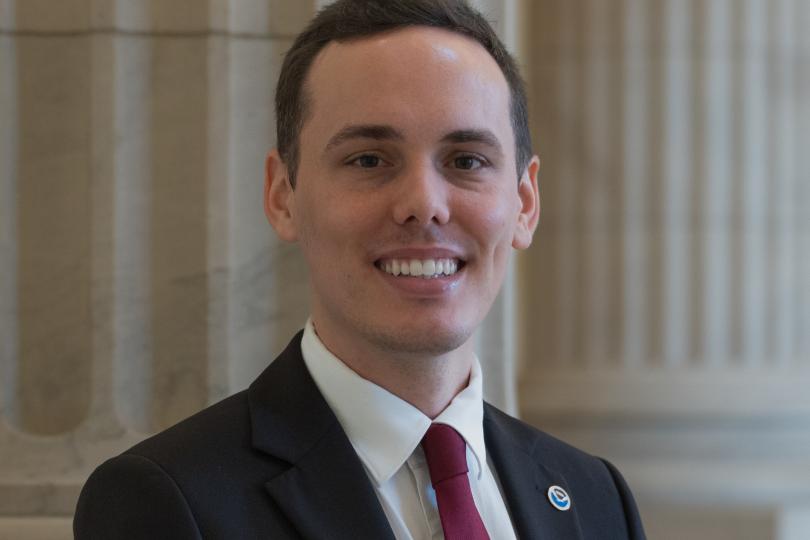
Tanner Waters has always wanted to make a positive impact through his career, but early in his professional life, didn’t always know the path toward that goal. He began his journey as an applied scientist as a first generation college student at Duke, working to understand the health consequences of exposure to arsenic. While he developed a deep passion for research, “over time I began to realize that my passion lies with preventing environmental harm rather than studying its impact after the fact,” he said.
This led Tanner to pursue a PhD at UCLA, studying the impact of restoration and conservation efforts on biodiversity. He found that academic research often stays behind the walls of the university, rather than going into the hands of the communities it’s intended to serve.
This experience pushed me to think more seriously about how scientific knowledge could better reach communities. In that pursuit, I became aware of the science-policy nexus and the value that a scientist could bring to ensuring that policy was informed by the best-available science.
Tanner Waters
Informed by his experience with science communication and policy training as a 2021 Switzer Fellow, Tanner explored policy as a pathway that leverages science to benefit the broader community. After a NOAA Knauss Marine Policy Fellowship advising the U.S. House Natural Resources Committee, Tanner returned to California for a science-policy fellowship with the California Ocean Science Trust (OST). The OST “supports and brings world-class science and innovation together with state and federal policymakers to accelerate progress toward a healthy and resilient coast and ocean. We do this by delivering science advice for policymakers, bringing science to lawmaking, supporting student research, and stewarding investments in ocean science.”
While at OST, Tanner supported the launch of the West Coast Ocean Science Action Agenda (the Action Agenda), a regional initiative to identify and advance shared science priorities across California, Oregon, and Washington. The Action Agenda “represents a recognition of the need for the U.S. West Coast to speak with one voice on ocean science needs for monitoring, observation, research, education, technology, and infrastructure given how vital solutions-oriented ocean science is to coastal blue economies, sustainable fisheries, natural resources, commerce, climate change adaptation, human wellbeing, and cultural and other values.”
The Action Agenda brings together those who are impacted by coastal and ocean decisions alongside those responsible for shaping and implementing them. Through a collaborative process, they seek to co-identify shared science needs and priorities along the West Coast, ensuring that future ocean research, monitoring, and innovation reflect the needs, knowledge systems, and lived experiences of the diverse communities and ecosystems that depend on a healthy coast and ocean.
As the initiative began to take shape, Tanner recognized an opportunity to strengthen how the Action Agenda engages with communities that are often excluded from environmental decision-making. Meaningfully incorporating these perspectives requires a different engagement approach than traditional collaborations with academic institutions or research partners. Tanner saw that his background in interdisciplinary marine science, years of work at the Center for Diverse Leadership in Science expanding access and participation in marine STEM, and experience in environmental and Tribal issues on Capitol Hill positioned him well to advance the Action Agenda through intentional and inclusive engagement.
Tanner and OST co-created a leadership position to put this vision into action, and OST was awarded a Switzer Leadership Grant in Spring 2026. As Senior Fellow: Ocean Science Action Agenda, Tanner will serve as the primary California representative responsible for setting programmatic direction, partnership building, workshop convening, and ensuring California's science priorities are synthesized, and translated for policy audiences.
The theory of change for this work is that effective and equitable climate solutions require the inclusion of diverse knowledge systems, expertise, and perspectives. Firstly, this means that ocean and coastal policies are informed by natural science, social science, and Indigenous knowledge. Secondly, it means that legislators, managers, and communities are prepared for implementing these equitable climate change solutions by creating academic education and workforce training opportunities. The Action Agenda is designed not only to accomplish this, but also to ensure that the benefits of those priorities are more equitably distributed across the communities that depend on coastal ecosystems.
In his role, Tanner will work to engage these constituencies through a variety of formats, and meaningfully integrate Tribally defined priorities, forward-looking science needs, and workforce development considerations needed for the next-generation of applied ocean science graduates. By shaping priorities upstream of policy and funding decisions, this work has high leverage to shape how resources are being allocated and how management actions are designed while delivering more equitable benefits for engaged Tribes and underrepresented constituencies. The ultimate impact of this project is a measurably healthier and more climate-resilient coast and ocean reflective of the needs and priorities of all members of the West Coast.
“When I received the Switzer Fellowship, I had just a faint understanding of the career possibilities ahead of me,” Tanner said. “The Switzer Fellowship created a space for me to think beyond traditional academic training and shape myself as an environmental leader.” It helped him articulate a leadership goal “to engage in community-centered research of Southern California’s coastlines that leads to substantive policy directives.” With support from this Leadership Grant, Tanner is taking steps toward his goal.
This project builds on the leadership path I first articulated through my original Switzer application five years ago. It presents the most significant role that I’ve been presented with yet to become an environmental leader within California and shape the next decade of ocean research.
Tanner Waters