
Supporting Tribal Beneficial Uses of Waters by Risk Assessment and Science Communication
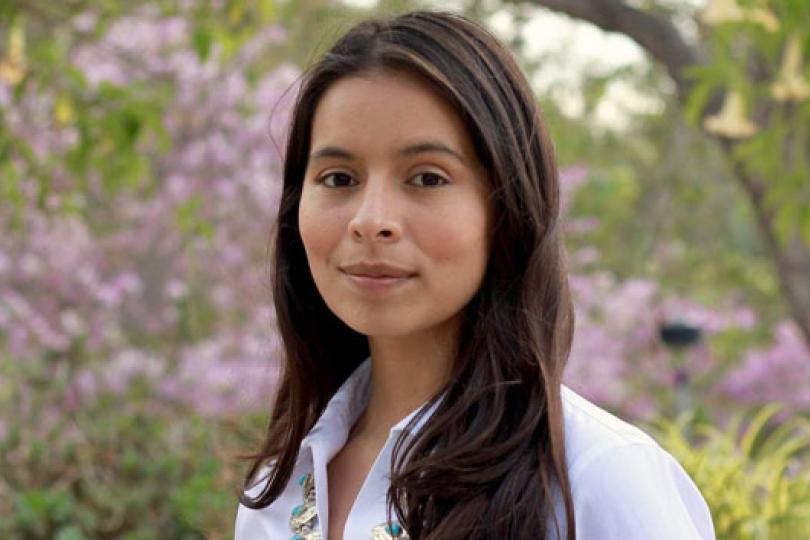
In this Leadership Grant, Jade Roccoforte will serve as the science liaison between the San Diego State University Hoh Lab and the Tribal Beneficial Uses Working Group of the San Diego Region. She will develop educational materials to engage tribal community members in setting new water quality objectives for San Diego waters to close data gaps and set standards to ensure the region’s waters are safe for subsistence fishing and other traditional activities.
The disruption of traditional environmental management in the San Diego Region
For millennia, the indigenous peoples of the San Diego region have harvested resources through a rich and varied ecosystem. This region’s ecological legacy was nurtured and enhanced through the traditional management practices of burning, traditional harvesting, wetlands enhancements and plantings. With the first European explorers and establishment of colonial Missions, a new relationship to the land was formed based on European concepts of agriculture and economics. European livestock and otter fur trade were pillars of the Mission economies, which had lasting and sometimes permanent effects on the land. Additionally, after the arrival of Americans, many Indigenous communities were further marginalized or even destroyed. Yet survivors adapted to the best of their abilities and the traditional relationship with the land continued for many Native people, in some places and times providing them their primary means of sustenance. Reservations were created starting in 1875, and populations were pushed to inland areas. To this day, many Native people continue using the riparian areas for harvest of food, medicine, and crafts.
(Credits to Michael Connolly Miskwish, Resource Economist and Kumeyaay Historian for sharing his work and materials on this subject.)
Over time economies have further developed and waterways have continued to suffer the effects of modern pollution. Today common sources of pollution include agricultural herbicides and pesticides, vehicle exhaust, run off from roadways, industry, urban storm water runoff, landfills, aging wastewater & stormwater infrastructure and underground storage tanks. To address these threats, State and national legislation have created regulatory programs to protect humans, and later included additional protections for threatened and endangered species. The ongoing presence and use of resources in riparian areas by Indigenous populations was never formally addressed, until the last decade.
California – Tribal Beneficial Uses
In 2017, California State law created the Tribal Beneficial Uses (TBU) category to help tribes protect off-reservation waters used for cultural practices. TBUs provide a framework to ensure that water quality standards account for tribal uses. All nine Regional Water Boards of California are in process of incorporating TBU category into their basin plans (water quality control plans). The first step is for the Water Boards to engage with California Tribes to determine what aquatic resources should be protected for tribal use, and what pollutants are of concern to tribes in the region.
In 2020, the San Diego Water Quality Control Board (SDWB) adopted TBU definitions in their Basin Plan and reached out to local tribes forming a local TBU Working Group (TWG). The TWG is composed of tribal environmental staff, cultural staff, and tribal members. TBU activities include subsistence fishing or use of aquatic resources, basket making, cultural ceremonies, medicinal practices, and many others. As these activities involve ingestion, inhalation, and dermal contact with water, and as a result, poor water quality holds implications for human health. However, no TBU standards have been set to date due to a lack of sufficient data to determine the levels of pollutants of concern, and uptake rates in vegetation used for cultural purposes.
To address this gap, tribal environmental staff from the local Tribal Beneficial Uses Working Group (TWG), reached out to the Hoh Environmental Health Laboratory to conduct a study on human health risks from water contaminants through Tribal Beneficial Use exposure. The information would support the TWG in their consultation with the San Diego Water Quality Control Board (SDWB) to make a revision to the water quality standards in their Basin Plan.
Building understanding through risk assessment and science communications
In order to achieve these goals, the TWG and SDSU are working together to develop a Tribal research protocol, sampling plan and chemical analysis of plants, water and sediment samples. This Switzer Leadership Grant is funding a portion of Jade’s position in order to produce educational materials to support the TWG’s capacity building and engagement efforts, and increase her expertise on the TBU topic and facilitate her ability to contribute to evidence-based policymaking on water quality.
It is very exciting that the California State Water Board has decided to commit to improving water quality standards to account for tribal cultural uses and I feel lucky to be a part of this project.
Jade Roccoforte
Jade will be integral for serving as a science liaison for the tribal community, leveraging her technical knowledge and training in environmental chemistry, water quality, and public health. She will help bridge communication between the tribal community and the academics, and potentially bridge understanding between tribal knowledge and academic science.
It is often difficult to explain sampling and risk assessment without turning to scientific jargon. Creating mini-webinars and 1-2 page notes on specific topics related to the study will support engagement by the tribal community, and train Jade on how to effectively communicate these complex topics in future conversations with policy makers and the public.
“It is going to be important for the tribes to have a clear understanding of the data that the Hoh Laboratory is providing,” Jade writes. “The Switzer funds will allow me to develop these educational materials that any person could pick up and understand.”
Additionally, Jade will bring her perspective as a Diné (Navajo) woman and her previous experience conducting water quality research that was used to inform her own tribe’s government, making her an invaluable and trusted partner for the TWG. The project will also further Jade’s professional goals by providing important experience in water quality policy.
“As an environmental chemist and a budding environmental health scientist with a passion for water justice, I aim to shape my career around strengthening water quality monitoring tools and water control policies,” Jade shares. “[This project] will give me a balanced and applied perspective of how science meets policy.”
Content for this story is excerpted from the original grant proposal created by SDSU, the TWG and Jade Roccoforte.